


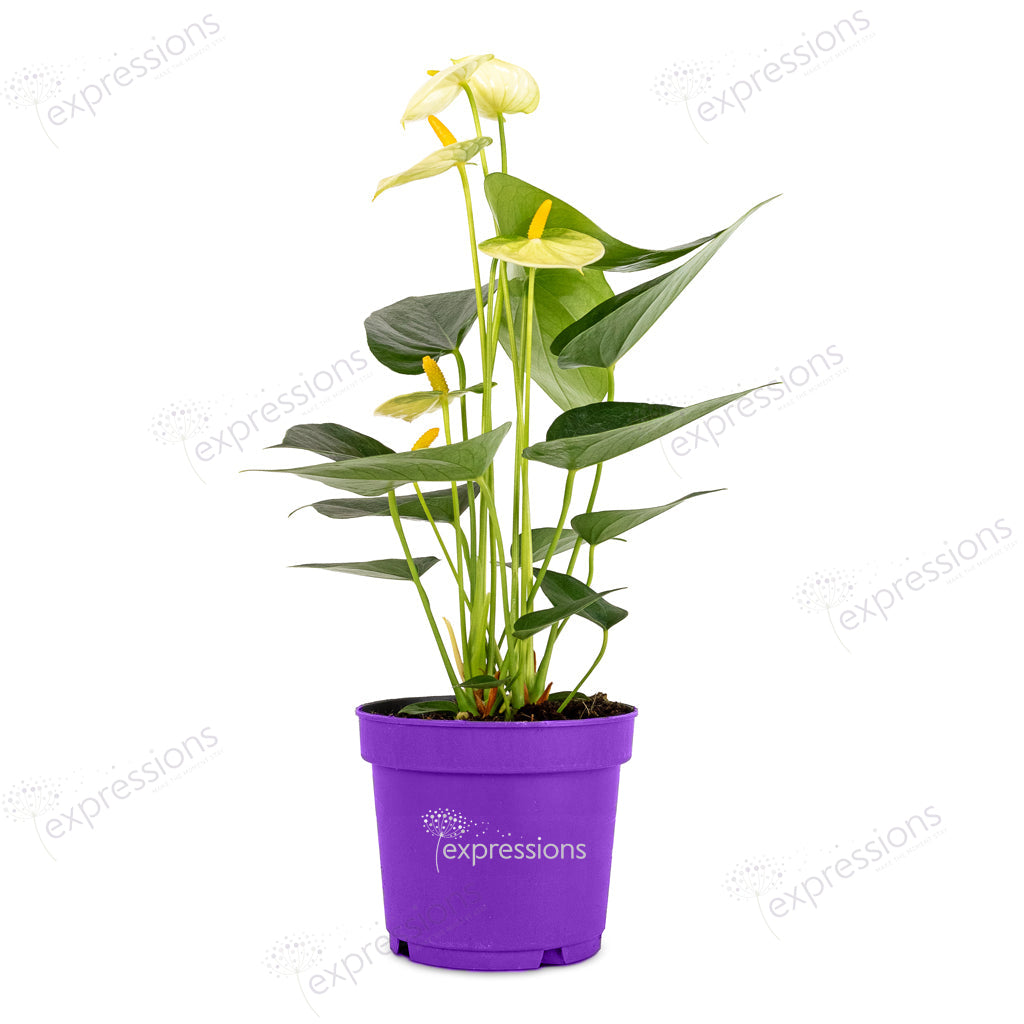
Plant Bio
Anthurium is a genus of herbs often growing as epiphytes on other plants. Some are terrestrial. The leaves are often clustered and are variable in shape. The inflorescence bears small flowers which are perfect, containing male and female structures. The flowers are contained in dense spirals on the spadix. The spadix is often elongated into a spike shape, but it can be globe-shaped or club-shaped. Beneath the spadix is the spathe, a type of bract. This is variable in shape, as well, but it is lance-shaped in many species. It may extend out flat or in a curve. Sometimes it covers the spadix like a hood. The fruits develop from the flowers on the spadix. They are juicy berries varying in color, usually containing two
Plant Care
 Water
Water
Water once a week or when the soil starts to become slightly dry at the top. Keep the soil lightly moist at all times, but do not overwater as this will cause brown spots and leaf drop. Curly or dry leaves suggest, the plant is dry and needs watering. Water in the early morning or late evening when temperatures are cooler. Always check your soil before watering.
 Sunlight
Bright indoor light or indirect sun. 6 hours to 8 hours
 Ambient
Maintain temperatures between 18°C - 24°C. Avoid draughts as these can create undesirable temperature fluctuations. Consider giving your plant an occasional misting twice every week to maintain the optimum humidity level.
 Nutrients
Apply liquid fertilizer once in 15 days when the plant is actively growing. For best results use Folikraft ready to use Indoor Plant Food.