


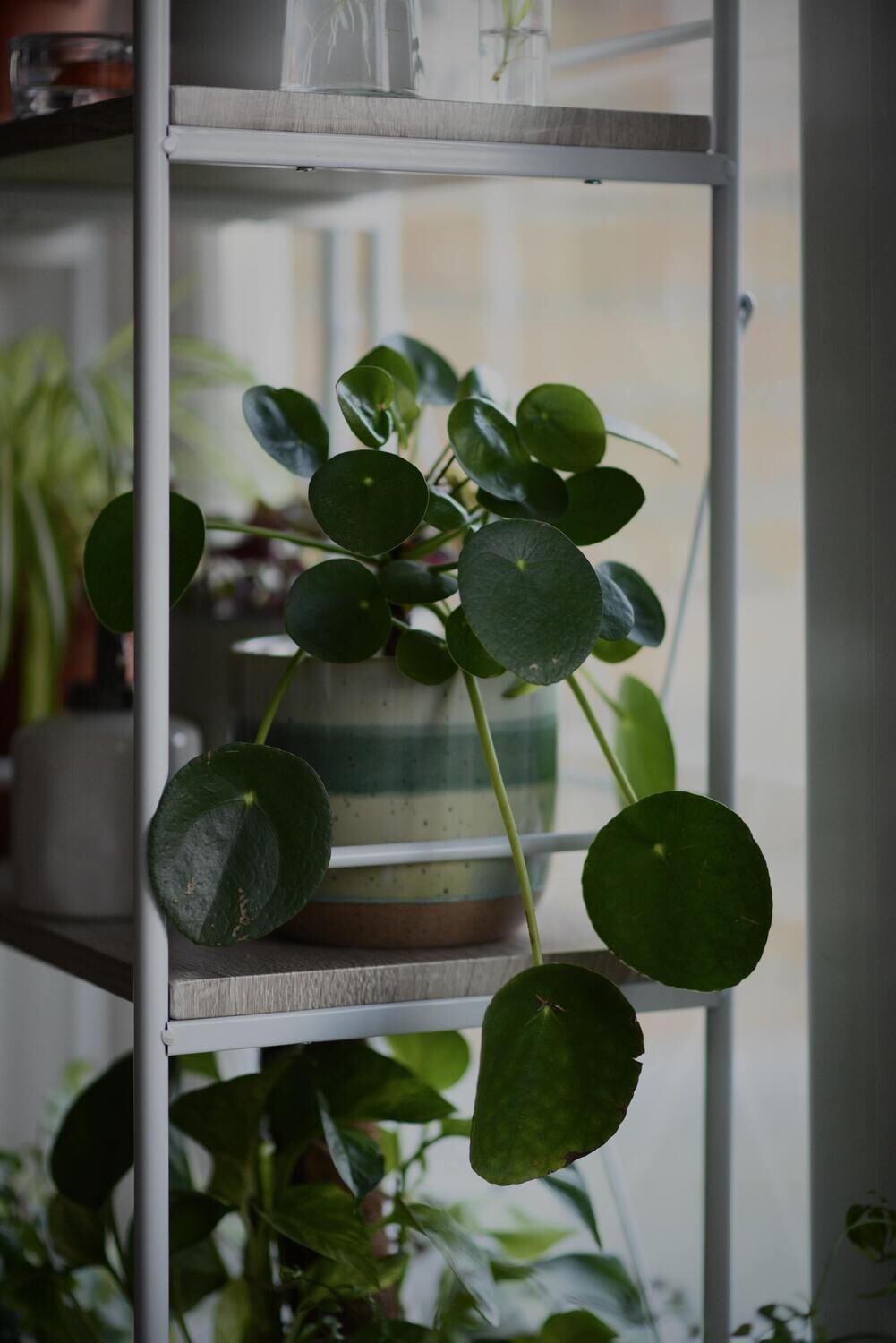
Plant Bio
The Chinese money plant (or Pilea) is frequently featured in Scandinavian interiors, where its bright green pancake-shaped leaves provide an adorable and welcome burst of colour against white walls. The Chinese money plant, also known as the missionary plant, lefse plant, pancake plant, UFO plant, or just pilea (short for its scientific name of Pilea peperomioides) is originally from the southwestern Yunnan province of China.
Light-wise, the best situation for a Chinese money plant is a bright light, with no direct sunlight. Direct sun scorches leaves, and light shade may encourage larger leaves. The Chinese money plant prefers well-draining potting soil. The soil needs to mostly dry out between waterings, with more watering required in warmer, sunnier weather. If the leaves start to look slightly droopy, that’s a sign that the plant needs water. To keep your Chinese money plant nicely shaped, rotate it at least once a week to prevent it from getting lopsided. The large leaves tend to accumulate dust, so these plants benefit from regular showers or at least wiping down of their leaves. Treat monthly with an all-purpose plant fertilizer during the spring and summer.
Plant Care
 Water
Water
Water once a week or when the soil starts to become slightly dry at the top. Keep the soil lightly moist at all times, but do not overwater as this will cause brown spots and leaf drop. Curly or dry leaves suggest, the plant is dry and needs watering. Water in the early morning or late evening when temperatures are cooler. Always check your soil before watering
 Sunlight
Bright indoor light or indirect sun. 6 hours to 8 hours
 Ambient
Maintain temperatures between 18°C - 24°C. Avoid draughts as these can create undesirable temperature fluctuations. Consider giving your plant an occasional misting twice every week to maintain the optimum humidity level.
 Nutrients
Apply liquid fertilizer once in 15 days when the plant is actively growing. For best results use Folikraft ready to use Indoor Plant Food.